Certified Family Law Specialist and CPA obtains emergency court order halting foreclosure on community property residence during California dissolution proceeding
A Southern California family nearly lost its primary residence to foreclosure after one spouse stopped making mortgage payments during a pending divorce. Attorney Charles M. Green, a Certified California Family Law Specialist and licensed CPA at Charles M. Green, APLC, secured a preliminary injunction from the Orange County Superior Court halting the foreclosure and preserving the home as a community asset.
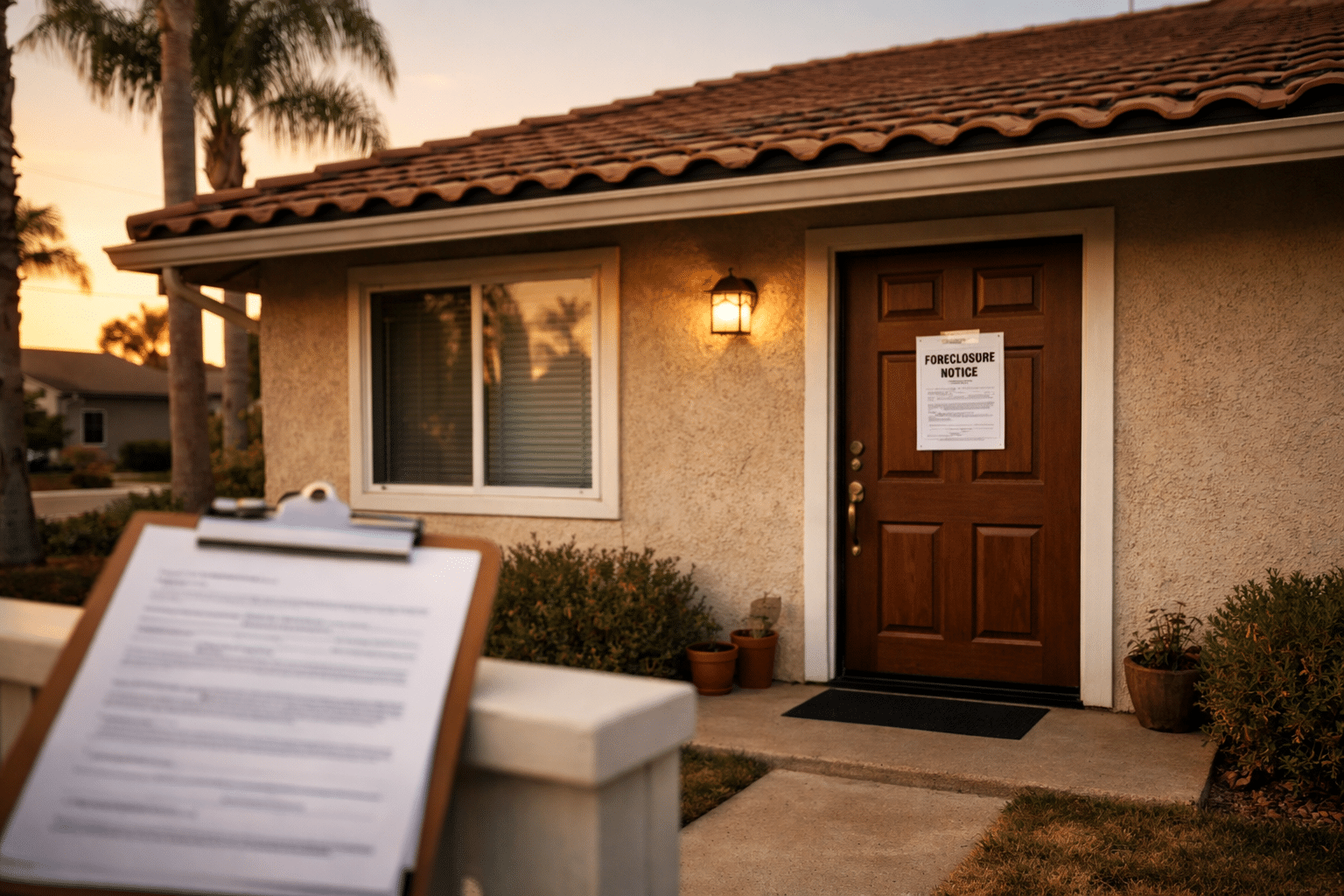
The case involved a dissolution proceeding in which the husband stopped making mortgage payments, resulting in more than $35,000 in arrears on the family home. With the lender moving toward a foreclosure sale, the property—and both spouses' equity— would be eliminated. Cases involving contested real estate, retirement accounts, and business interests fall under what attorneys classify as complex divorce — proceedings that require both legal strategy and financial analysis to protect community assets.
Green filed an emergency request for order on behalf of his client, the wife, and argued before the court that equitable relief was warranted under California Civil Code sections 4351 and 4359 and Code of Civil Procedure section 527. The court agreed, issuing a preliminary injunction that restrained the lender and all persons acting in concert with it from proceeding with any foreclosure sale, trustee's sale, or other disposition of the residence.
The court's formal ruling was issued as a minute order — a procedural mechanism California courts use to document decisions made during hearings. The order required the husband to immediately pay the past-due mortgage balance and continue making monthly payments to preserve the community asset. The wife was granted exclusive decision-making authority over the subsequent sale of the property.
The case reflects a broader pattern affecting California families. According to ATTOM, a national property data analytics firm, U.S. foreclosure filings surged 20 percent year-over-year in late 2025, with California recording 14,751 foreclosure starts in the first half of the year alone — third-highest nationally. Los Angeles and Riverside counties accounted for a significant share of those filings. Rising mortgage costs, insurance premiums, and economic pressure have increased the likelihood that one spouse may stop making payments during a contested divorce, placing shared assets at risk. In community property states like California, where courts are required to divide marital assets equally, a foreclosure can eliminate equity to which both spouses are legally entitled.
"When one spouse stops paying the mortgage during a divorce, the other spouse's equity doesn't just shrink — it can disappear entirely," said Charles M. Green, Certified California Family Law Specialist and licensed CPA at Charles M. Green, APLC. "Foreclosure doesn't wait for a property settlement. If you don't act fast, the lender will."
Green noted that his background as both an attorney and a CPA enabled him to quickly identify the financial exposure and build the legal argument for the property's community asset characterization—a step that requires an understanding of both California family law and real estate finance. In this case, calculating total exposure required accounting not only for the $35,000 in past-due payments but also for accrued penalties, potential deficiency liability, and the impact of a foreclosure on both parties' credit and future borrowing capacity.
The court reserved the issue of sanctions against the husband under Family Code section 271, which allows penalties for conduct that frustrates the policy of promoting settlement and reducing litigation costs.
###
For more information about Charles M. Green, APLC, contact the company here:
Charles M. Green, APLC
Charles M. Green
213-387-4508
miguel@greenlawcorp.com
3699 Wilshire Blvd Ste 700
Los Angeles, CA 90010