
New federal data showing that tens of millions of Americans continue to spend most of their working hours at home has prompted Small Space Logic to caution that compact-home workers often optimize their desks for available wall space rather than for the body using them. According to the U.S. Bureau of Labor Statistics September Employment Situation report, released October 2, 2026, some 34.679 million people worked at home for pay during the reference week, representing 21.9 percent of those at work. Those individuals averaged 25.4 hours of work from home each week, or 67.2 percent of their aggregate working hours.
A separate BLS Job Flexibilities and Work Schedules report, released September 24, 2026, found that 51 million wage-and-salary workers sometimes worked at home during 2024 and 2025, with 42 million reporting days spent working only from home. Among those with work-from-home-only days, 87 percent did so at least once a week, and more than one-third worked from home five or more days per week.
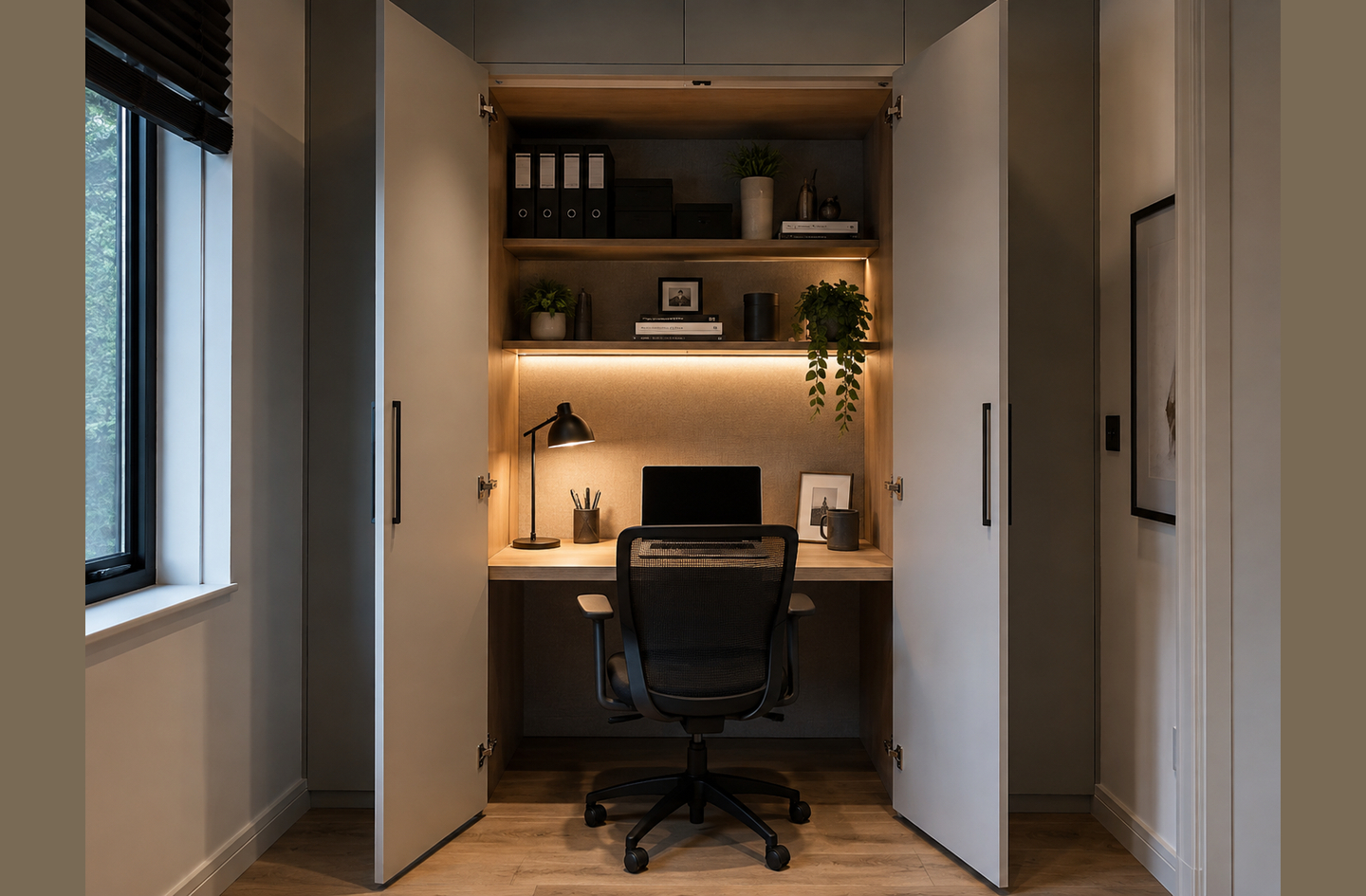
Small Space Logic notes that these figures describe sustained, daily work rather than occasional laptop use, which raises the stakes for how compact workspaces are planned. The company argues that the common instinct to find the smallest desk that fits between two walls can be the wrong starting point, because a desk that fits physically does not mean the complete workstation fits.
"A small workspace is a chain of interacting dimensions, from the body to the chair, the screen distance, the desk depth, the chair clearance and the circulation route behind it," said Oded Feigin, a representative of Small Space Logic. "The desk should be chosen only after those constraints are mapped. Saving a few inches of depth can quietly remove the depth required to position a monitor correctly."
That concern has independent technical grounding. The Occupational Safety and Health Administration recommends placing a monitor at least 20 inches from the user, with a preferred viewing distance generally between 20 and 40 inches, and positioning the top line of the screen at or below eye level. The National Institute for Occupational Safety and Health advises that a properly designed workspace, including appropriate seating, monitor position and separate input devices, can help prevent workplace musculoskeletal disorders.
To help readers apply these standards, the company has published the Small Space Logic Small Home Office Guide, which maps room placement, layout clearances, furniture, workspace systems and rental constraints. The Small Space Logic Ergonomic Home Office Guide works through the setup in order, beginning with desk depth and clearance before moving to chair height, monitor position and input placement. The Small Space Logic Guide to Choosing a Desk for Small Spaces details surface dimensions, legroom clearance and storage so that the desk is selected to fit the work rather than only the wall.
"The useful question is not how small a home office can be, but how small it can become before the space saving starts compromising the workstation," Feigin added.
Small Space Logic publishes research-based guidance on the engineering of every inch of small spaces, covering layout, systems and furniture selection for compact homes and shared rooms.
###
For more information about Small Space Logic, contact the company here:
Small Space Logic
Oded Feigin
info@smallspacelogic.com
144-42 Jewel Avenue
Flushing, NY 11367
United States